SIM Swap Attacks: How Phone Hijacking Risks Account Security

Quick Answer
A SIM swap attack occurs when criminals transfer your phone number to a SIM card they control, allowing them to intercept calls and SMS verification codes. This can expose bank accounts, emails, and personal data to unauthorized access, identity theft, and financial fraud.
Your phone number can unlock access to your digital identity, making it a target for cybercriminals. In a SIM swap attack, fraudsters take control of your number and may bypass security that relies on text messages. This can put bank accounts, email, cryptocurrency wallets, and social media profiles at risk. Learn how SIM swap attacks work, watch for warning signs, and use stronger security measures to help protect your information and prevent account takeovers.
What SIM Swap Attacks Are and Why They Matter
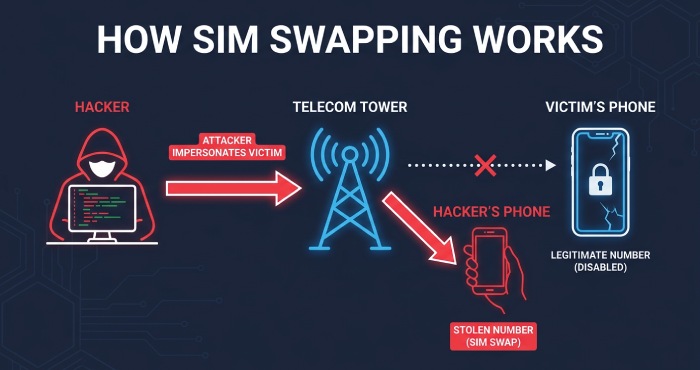
A SIM swap attack is a form of phone-number hijacking in which a fraudster convinces a telecommunication provider to transfer a victim’s phone number to a SIM card or eSIM controlled by the attacker. Once the number is moved, calls and SMS messages intended for the victim go to the criminal instead. This makes SIM swapping especially dangerous because many banks, email providers, cryptocurrency exchanges, and social media platforms still use SMS for account recovery and two-factor authentication.
SIM swapping is also known by several related terms, including port-out scam, SIM splitting, and simjacking. In many cases, a port-out scam abuses mobile number portability—the legitimate process that allows customers to move a phone number between carriers. Mobile number portability is useful for consumers, but it can become an attack vector when identity checks are weak or when a telecom insider helps bypass controls.
Why SMS-Based Security Is a Target
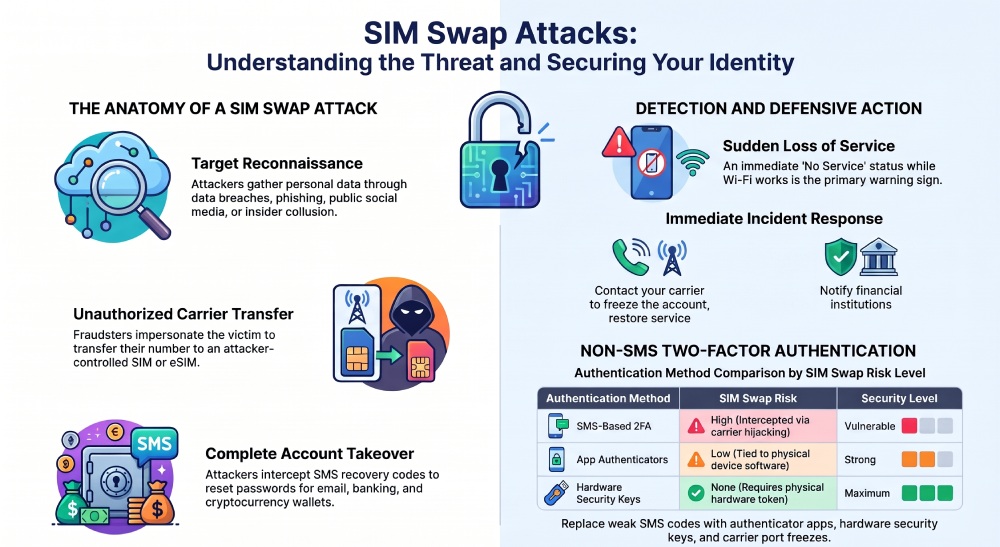
The core risk is account takeover. If an attacker receives the victim’s SMS code, one-time password, or password reset link, they may be able to access email, online banking, digital currency wallets, cloud accounts, or social media profiles. A SIM swap attack can therefore become the first step in identity theft, bank account compromise, extortion, and broader cybercrime.
Security researchers, law enforcement, and industry reports have repeatedly warned that SMS is not a strong authentication channel. Microsoft has also emphasized risks around identity attacks in publications such as the Microsoft Digital Defense Report 2024. While two-factor authentication and two-step verification are better than passwords alone, SMS-based two-factor authentication is vulnerable when the phone number itself can be stolen.
How Attackers Hijack Phone Numbers
Most SIM swapping starts with reconnaissance. The attacker gathers personal information such as a name, address, date of birth, account information, carrier details, or the last digits of payment cards. This data may come from a data breach, phishing, public social media posts, black market databases, or direct social engineering.
A fraudster may then contact the victim’s telephone company, claiming that their mobile phone was lost or that they need a replacement SIM card. Through impersonation, they persuade customer service or technical support to activate the victim’s phone number on a device the attacker controls. In other cases, bribed employees or a telecom insider may help move the number without proper verification.
Mobile Number Portability and Port-Out Abuse
A port-out scam commonly relies on mobile number portability. The attacker requests that a number be transferred from one carrier to another, such as from T-Mobile to another provider or from Verizon to a prepaid account. If the carrier approves the transfer, the victim’s mobile phone loses service while the attacker begins receiving voice call and SMS traffic.
This type of SIM swap fraud is sometimes described as SIM splitting or simjacking, though simjacking can also refer to technical abuse of SIM-based applets. In both cases, the result is similar: the attacker gains control of communications tied to the victim’s subscriber identity module. The hijacked number becomes a gateway into accounts that trust SMS, password reset via SMS, or a recovery phone number.
Social Engineering, Phishing, and Insider Threats
Attackers often combine phishing with SIM swapping. A convincing email or fake carrier portal may ask the victim to “verify” account details, carrier PINs, or two-step verification codes. Organizations should pair employee training with strong phishing protection to reduce the chance that credentials and personal information are exposed.
A SIM swap attack may also involve direct manipulation of carrier staff. Investigations reported by outlets such as Vice, Bloomberg Businessweek, Business Insider, and MIT Technology Review have described cases involving social engineering, weak telecom security, and alleged insider assistance. The SS7 vulnerability problem is separate from SIM swapping, but both show why telecom security matters: telephone networks were not originally designed for modern account security.
Account Security Risks: Banking, Email, Crypto, and Social Media
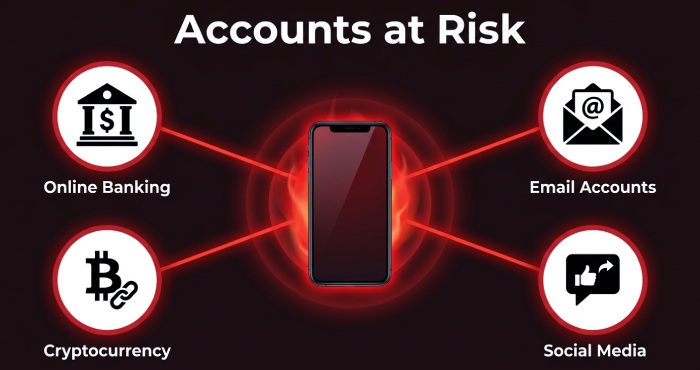
Once SIM swapping succeeds, account takeover can happen quickly. Email is usually the highest-value target because it controls password reset workflows for many other services. If the attacker can reset the victim’s email password, they can search inboxes for bank alerts, exchange accounts, cloud storage, tax documents, or other sensitive account information.
Online banking is another major target. Criminals may initiate transfers, intercept SMS authorization codes, or trigger password reset flows. In severe cases, SIM swapping leads to bank account compromise, fraudulent wire transfers, and long recovery processes with banks and carriers.
Cryptocurrency and Digital Currency Theft
Cryptocurrency accounts are especially exposed when a user relies on SMS two-factor authentication. Digital currency transfers can be irreversible, and attackers may drain exchange balances within minutes. The widely reported case involving Michael Terpin, Transform Group, Nicholas Truglia, and Ellis Pinsky—who was associated in reporting with Irvington High School in Irvington, New York—helped bring public attention to high-value SIM swap attack lawsuits and crypto-related theft allegations.
Because cryptocurrency markets operate globally and quickly, fraud prevention requires stronger controls than SMS. App-based authenticators, hardware security keys, withdrawal allowlists, and delays for new devices are safer than two-step verification codes sent by SMS.
Social Media and Public-Profile Hijacking
Social media accounts on Instagram, Twitter, and similar platforms are attractive targets for extortion, scams, and reputational harm. A famous example involved the account of Jack Dorsey, then Twitter CEO, whose Twitter account was compromised through phone-number-related weakness reported at the time. Attackers may use a hijacked number to reset passwords, post scams, demand ransom, or impersonate the victim.
The same attack pattern affects ordinary users, influencers, journalists, executives, and public officials. A SIM swap attack against a high-profile account can spread fraud quickly because followers often trust messages from a known identity.
Warning Signs and Immediate Steps After a SIM Swap
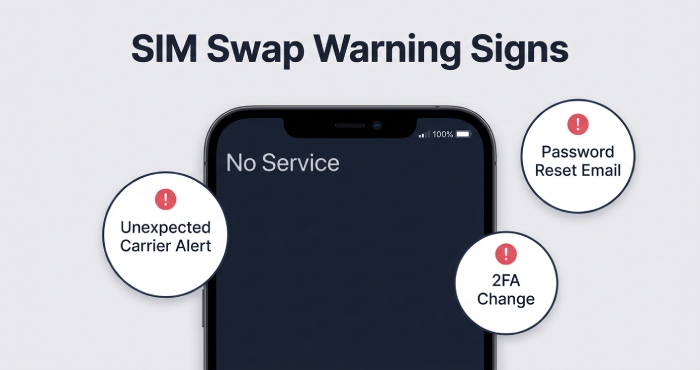
The most obvious warning sign is sudden loss of cellular service. If your phone shows “No Service,” cannot place a voice call, and stops receiving SMS messages while Wi-Fi still works, SIM swapping or a port-out scam may be underway. Other signs include unexpected carrier notifications, password reset emails, alerts about two-factor authentication changes, or login attempts from unfamiliar locations.
A victim may also receive a text message warning that a SIM card change has been requested. Unfortunately, by the time the victim sees the message, the attacker may already be completing the account takeover.
What to Do Immediately
First, contact your telecommunication provider using a trusted number—not a link from a suspicious text message. Ask the carrier to freeze the account, reverse the unauthorized mobile number portability request, and restore service to your legitimate SIM card or eSIM. File a SIM swap complaint and request a written fraud report for your records.
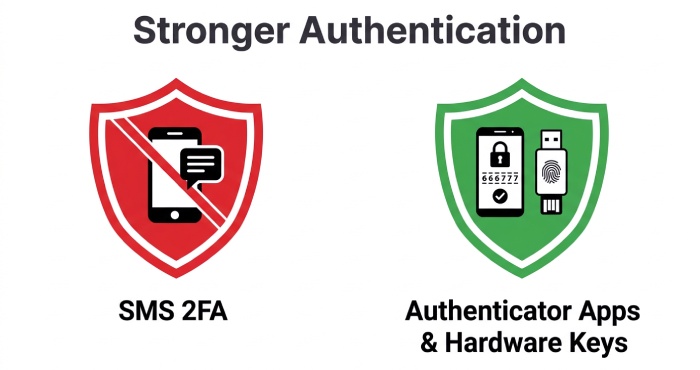
Second, secure your most important accounts. Change passwords for email, online banking, cryptocurrency exchanges, and social platforms. Remove the hijacked number as a recovery phone number where possible. Replace SMS two-factor authentication with an authenticator app or hardware security key. If an account allows password reset via SMS, disable that option.
Third, notify banks, card issuers, and exchanges. Ask them to monitor for suspicious activity and block withdrawals if needed. In the United States, victims may report to the FBI’s cybercrime channels. In the United Kingdom, Action Fraud, Cifas, and the National Fraud Database are relevant resources. Reporting pathways vary worldwide; for example, telecom and mobile-money ecosystems in Kenya, including Safaricom, face different risk patterns than carriers in South Korea, Nigeria, or the United Kingdom. Publications such as Nigeria CommunicationsWeek, The Guardian, The Times of India, and Gadget Now have covered regional developments in SIM swap fraud and mobile-account abuse.
Prevention Strategies: Strong Authentication and Carrier Protections
The best defense is to reduce dependence on SMS. Use two-factor authentication, but choose stronger forms whenever possible. App-based codes are better than SMS, and hardware security keys are stronger still. For critical accounts, two-step verification should not rely on a phone number that can be transferred through mobile number portability.
Use unique passwords stored in a password manager. If one service suffers a data breach, reused passwords can accelerate account takeover. Keep recovery email addresses secure, review account recovery settings, and remove old phone numbers. For high-value accounts, avoid password reset via SMS entirely.
Strengthen Carrier-Level Protections
Ask your telephone company to add a port freeze, number lock, account PIN, or high-security note requiring in-store verification. T-Mobile, Verizon, and other carriers offer different forms of account protection, but users often need to enable them manually. Avoid sharing personal information that could help with impersonation, including carrier account numbers, billing ZIP codes, and answers to security questions.
Businesses should treat SIM swapping, SIM splitting, simjacking, and the port-out scam as identity risks, not merely telecom problems. Executives, finance staff, IT administrators, and employees with access to payment systems or cryptocurrency wallets need enhanced fraud prevention controls. A single SIM swap attack can bypass SMS, defeat weak two-step verification, and trigger full account takeover across email, banking, and social platforms.
General Manager
General Manager of DuoCircle. Product strategy and commercial lead across DuoCircle's 2,000+ customer base.
LinkedIn Profile →Protect your inbox from phishing attacks
Real-time email security with 60-day free trial. No credit card required.