Executive Impersonation Phishing Explained: How Cybercriminals Mimic Business Leaders

Quick Answer
Executive impersonation phishing is a cyberattack in which criminals pose as CEOs, executives, or managers to trick employees into sharing sensitive data, transferring funds, or approving fraudulent requests. Verifying requests through trusted channels helps prevent these attacks.
Executive impersonation phishing is a targeted form of spear phishing in which attackers pretend to be a CEO, CFO, founder, board member, or other senior leader to pressure employees into taking risky actions. These phishing attacks often aim to trigger wire transfers, change payroll details, disclose sensitive data, approve vendor payments, or share login credentials. In many organizations, this threat is closely tied to CEO fraud and business email compromise, two attack categories that rely heavily on social engineering rather than technical exploitation alone.
Why Executives Are Effective Impersonation Targets
Cybercriminals mimic business leaders because executives carry authority. A short message that appears to come from the CEO can bypass normal skepticism, especially when it references urgency, confidentiality, or a high-value business event.
Authority, urgency, and trust
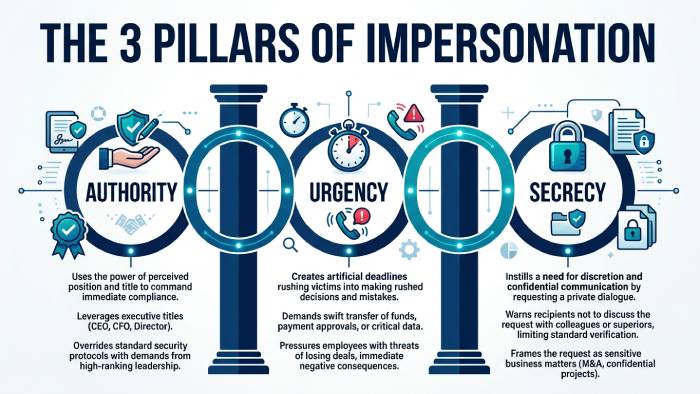
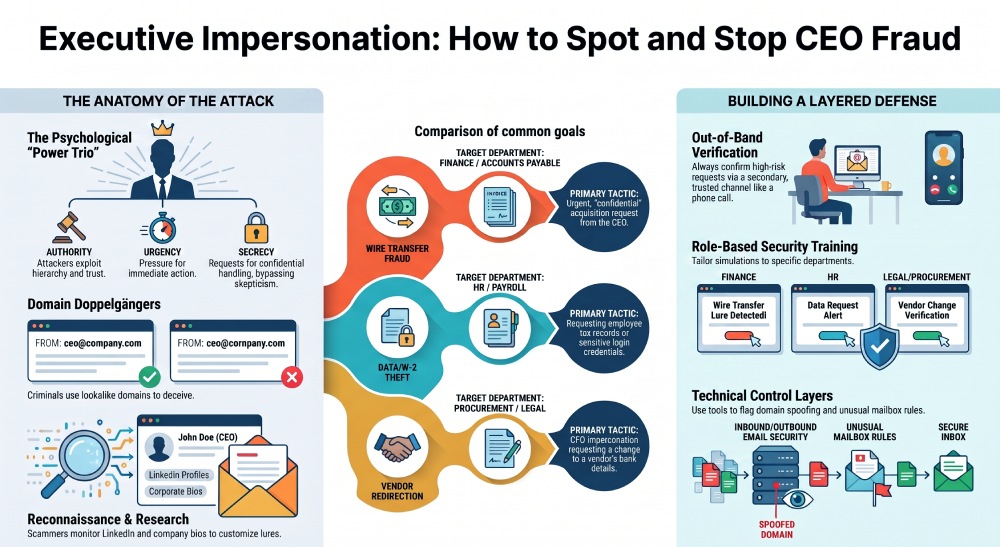
Executive impersonation phishing works because it combines three powerful social engineering triggers:
- Authority: “This is from the CEO, so I should act quickly.”
- Urgency: “This must be completed before the end of the day.”
- Secrecy: “Do not discuss this with anyone else.”
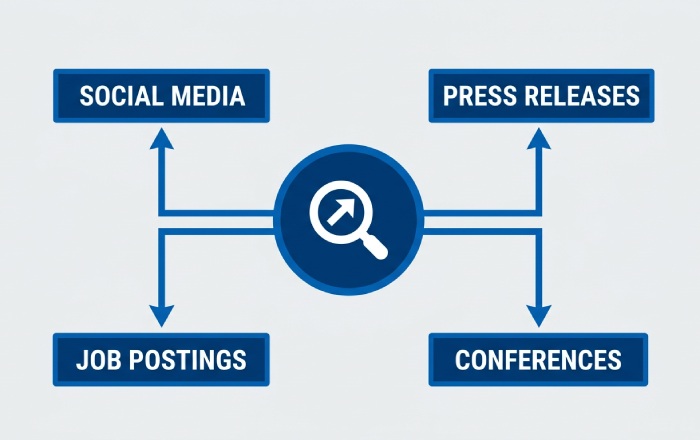
These tactics make spear phishing particularly dangerous. Unlike generic phishing attacks, spear phishing messages are customized using company details, executive names, current projects, vendor relationships, and employee roles found through LinkedIn, X, Facebook, TikTok, YouTube, company websites, press releases, and public filings.
The Link to Business Email Compromise
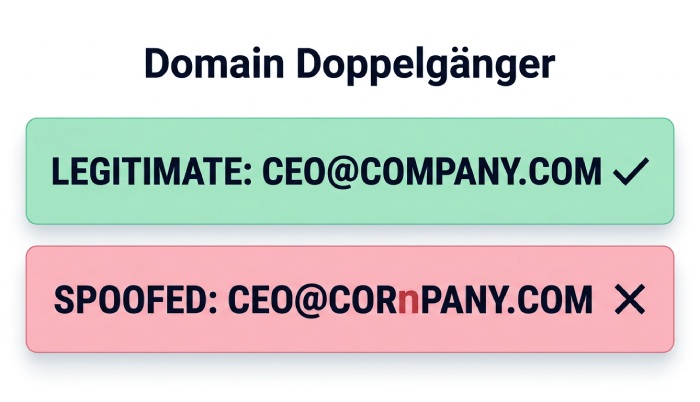
Business email compromise frequently begins with executive impersonation phishing. In some cases, attackers use domain spoofing or a domain doppelgänger that looks nearly identical to the company’s real domain. In others, they rely on credential compromise, taking over a legitimate executive mailbox and sending fraudulent instructions from a trusted account.
Why technical controls are not enough
Strong email security is essential, but CEO fraud often succeeds because it manipulates people, processes, and trust. Effective phishing prevention requires layered cybersecurity controls, security awareness training, attack simulation, clear security policies, and fast incident response.
How Attackers Research Executives Before Sending Emails
Executive impersonation phishing rarely starts with the message itself. Before attackers contact an employee, they often conduct reconnaissance to understand who has authority, who processes payments, who supports executives, and which business events could create a believable reason for urgency. This research helps criminals write messages that sound less like random phishing attacks and more like normal internal communication.
Public sources attackers monitor
Attackers may review executive biographies, company announcements, leadership interviews, conference schedules, job postings, investor updates, and employee social media activity. A post about a CEO traveling, a finance leader attending a board meeting, or a new vendor relationship can become the hook for a convincing spear phishing email. Even small details, such as how an executive signs their name or which assistant manages their calendar, can make an impersonation attempt more credible.
Reducing the signals that attackers can exploit
Organizations do not need to eliminate all public information, but they should be intentional about what they publish. Security teams can partner with marketing, HR, legal, and executive offices to review sensitive disclosures, limit unnecessary email exposure, and educate employees about oversharing operational details online. This approach reduces the raw material attackers use while still allowing the business to communicate normally with customers, partners, and the market.
Common Tactics Cybercriminals Use to Mimic Business Leaders
Attackers use multiple attack vectors to make executive impersonation phishing believable. The most successful campaigns blend reconnaissance, social engineering, and weaknesses in email security.
Spoofed Domains and Lookalike Emails
Domain spoofing allows attackers to make an email appear as though it came from a trusted executive. A domain doppelgänger may use small changes such as replacing “company.com” with “cornpany.com” or adding a hyphen to a legitimate-looking domain.
Email exposure and public data
Attackers often study email exposure using public sources or breached data. Tools such as Email Exposure Check Pro and Domain Doppelgänger can help organizations understand how exposed their executives and domains may be. A weak password test can also reveal risky credential practices that increase the likelihood of credential compromise.
Compromised Accounts and Thread Hijacking
In more advanced business email compromise cases, attackers compromise a real account and insert themselves into existing conversations. This makes phishing attacks harder to detect because the message comes from a legitimate mailbox.
Inbound and outbound risks
Inbound email security helps stop malicious messages before they reach users, while outbound email security helps detect suspicious account behavior, such as unusual forwarding rules or unexpected payment instructions. Cloud email security platforms such as KnowBe4 Cloud Email Security, Defend, and Prevent can support threat detection across Microsoft 365 and Google Workspace environments.
Personalized Spear Phishing Messages
Spear phishing campaigns often mention real invoices, board meetings, acquisitions, travel schedules, or employee responsibilities. Criminals may use AIDA-style persuasion—attention, interest, desire, action—to structure messages that feel natural and compelling.
Example manipulation pattern
A fake CEO message may begin with a casual greeting, reference an internal project, introduce urgency, and then request a wire transfer or document containing sensitive employee data.
Real-World Scenarios: Fake CEO Requests, Vendor Payments, and Data Theft
Executive impersonation phishing often appears in realistic business workflows, which is why security awareness training and attack simulation should reflect scenarios employees actually encounter.
Fake CEO Wire Transfer Requests
A finance employee receives an email that appears to come from the CEO: “I need you to process a confidential acquisition payment today. I’m in meetings, so reply by email only.” This is classic CEO fraud and business email compromise.
What makes it convincing
The message may include the CEO’s signature, a familiar tone, and a plausible deadline. If the employee has not received security awareness training or practiced attack simulation scenarios, the request may seem routine.
Vendor Payment Redirection
Attackers impersonate a CFO, procurement leader, or vendor contact and request that future payments go to a new bank account. These phishing attacks can remain undetected for weeks, creating significant cyber risk and financial loss.
Controls that reduce risk
Organizations should require secondary verification for bank account changes, enforce security policies for vendor onboarding, and use incident management workflows when employees report suspicious payment requests.
Data Theft and Credential Harvesting
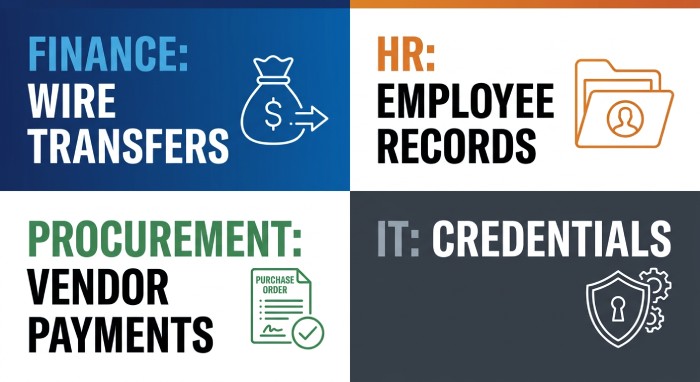
Some executive impersonation phishing campaigns ask HR or payroll teams to send W-2 forms, employee records, tax documents, or login credentials. Others deliver links to fake Microsoft 365 login pages designed for credential compromise. In severe cases, stolen credentials can lead to ransomware, lateral movement, or malware simulation findings during a controlled assessment.
Related training scenarios
A mature security awareness program should include CEO fraud, Spear Phishing, ransomware simulator exercises, and BreachSim-style attack simulation to test whether employees identify suspicious links, attachments, and requests.
Role-Based Guidance for High-Risk Teams
Different departments face different forms of executive impersonation phishing, so prevention should not rely on one generic message for everyone. Finance teams should be trained to verify payment instructions, bank account changes, invoice exceptions, and urgent wire requests. HR and payroll teams should focus on tax forms, employee records, direct deposit changes, and requests for bulk personal information. Executive assistants should be prepared for calendar-based lures, travel-related scams, and confidential document requests that appear to come from senior leaders.
Legal, procurement, IT, and customer-facing teams also need tailored guidance. Procurement may see vendor impersonation, legal may receive fake settlement or acquisition requests, and IT may be pressured to reset credentials or approve access. Role-based user training makes security policies easier to apply because employees see examples that match their daily work. When training reflects real workflows, users are more likely to pause, verify, and report instead of simply trying to complete a task quickly.
Warning Signs Employees Should Watch For
Employees are the last line of defense when phishing attacks bypass technical controls. Security awareness training, real-time coaching, and a strong security culture help users recognize executive impersonation phishing before damage occurs.
Red Flags in the Message
Common warning signs include unusual urgency, secrecy, payment changes, requests to bypass normal approval, grammar inconsistencies, and email addresses that are slightly altered.
Behavioral indicators
Employees should be cautious when receiving a message:
- Requests gift cards, wire transfers, payroll changes, or sensitive files
- Claims the executive is unavailable by phone
- Asks the recipient not to involve others
- Pressures action outside standard security best practices
- Uses a domain doppelgänger or an unfamiliar sender address
Red Flags in the Process
CEO fraud succeeds when employees abandon normal procedures. A request that conflicts with security policies, compliance requirements, or regulatory compliance obligations should be escalated immediately.
When to report
Employees should use a phishing alert button, such as the KnowBe4 Phish Alert Button, to report suspicious messages to the security team or Phishing Analysis Center. Fast reporting improves incident response and helps incident management teams contain business email compromise attempts.
Red Flags in Attachments and Links
Attackers may attach fake invoices, shared document links, or password-protected files. These phishing attacks can lead to credential compromise, malware infections, or ransomware.
Practical user checks
Before clicking, employees should inspect the sender, hover over links, verify the domain, and confirm requests through a trusted channel such as a known phone number or approved collaboration platform.
Prevention Strategies: Verification Processes, Training, and Security Controls
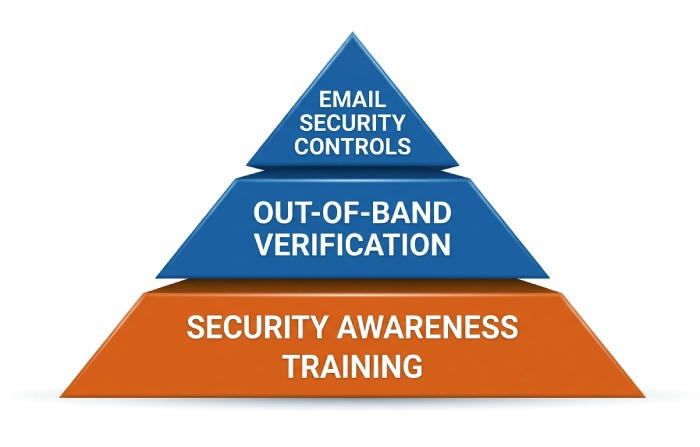
Preventing executive impersonation phishing requires a layered defense that combines people, process, and technology. No single email security tool can stop every form of CEO fraud, spear phishing, or social engineering.
Establish Strong Verification Processes
Organizations should require out-of-band verification for high-risk actions, including wire transfers, vendor bank changes, payroll modifications, and sensitive data requests.
Approval workflows
Use dual approval for financial transactions, documented escalation paths, and role-based access controls. These measures support risk mitigation while reducing the likelihood that executive impersonation phishing will succeed.
Build a Mature Security Awareness Program
Security awareness training should be continuous, role-based, and supported by a realistic attack simulation. Finance, HR, executive assistants, legal, and procurement teams need user training tailored to CEO fraud and business email compromise. An Automated Security Awareness Program can help organizations deliver the right training at the right time, especially when employee risk levels, job roles, or phishing test results change.
Training content and reinforcement
KnowBe4 Security Awareness Training, The Inside Man Series, Compliance Plus, and the Compliance Training Library can help organizations deliver engaging compliance training and cybersecurity education. A training library should include executive impersonation phishing, spear phishing, ransomware, credential compromise, and secure payment workflows.
Real-time coaching
SecurityCoach and similar real-time coaching tools can reinforce security best practices when users interact with risky websites, report suspicious emails, or trigger security events.
How an Automated Security Awareness Program Reduces Human Risk
An Automated Security Awareness Program helps security teams move beyond one-time annual training and build a continuous behavior-change process. Instead of manually assigning the same content to every employee, automation can use phishing simulation results, risk scores, department, seniority, and security events to deliver targeted education. This is especially valuable for executive impersonation phishing because the highest-risk employees are often the people with access to payments, sensitive records, contracts, and executive communications.
Automation opportunities across the employee lifecycle
Automation can support onboarding, refresher training, remediation, reporting, and manager follow-up. New employees can receive baseline phishing prevention training before they handle sensitive requests. Employees who click simulated phishing emails can be assigned short, relevant modules immediately. High-risk departments can receive scenario-based reminders before quarterly close, tax season, mergers, audits, or major vendor changes. Security leaders can also use automation to track completion, measure improvement, and demonstrate progress to executives, auditors, and compliance teams.
A well-designed automated approach should still feel human. The goal is not to punish employees, but to give them timely, practical guidance that helps them make safer decisions. When automation is paired with clear security policies and a positive reporting culture, employees are more likely to report suspicious messages quickly and less likely to view training as a checkbox exercise.
Use Attack Simulation and Human Risk Assessment
Attack simulation helps organizations measure how employees respond to phishing attacks in a safe environment. A phishing security test, malware simulation, ransomware simulator, or BreachSim exercise can reveal gaps in behavior, controls, and process design.
Measuring human risk
Human risk assessment tools such as Agent Risk Manager, Security Culture Analysis Center, and a Program Maturity Assessment can help security teams understand risk by department, role, and behavior. These insights improve the security awareness program and support customer success outcomes.
Metrics That Show Whether Defenses Are Working
Security teams need measurable indicators to understand whether executive impersonation phishing defenses are improving. Useful metrics include phishing simulation failure rates, report rates, time to report, repeat clickers, training completion, risky behavior by department, and the number of suspicious payment requests escalated through approved channels. These measurements help identify where additional coaching, process changes, or technical controls may be needed.
Metrics should also include response performance. For example, how quickly can the team triage a reported executive impersonation email, search for related messages, block lookalike domains, and notify affected users? Over time, organizations should look for faster reporting, fewer employees engaging with simulated attacks, and better adherence to verification workflows. The most valuable metrics connect awareness activity to real business risk, not just training completion.
Strengthen Email Security Controls
Modern email security should include inbound email security, outbound email security, authentication controls, threat detection, and cloud email security. Security tools should inspect links, attachments, sender reputation, domain spoofing attempts, and suspicious mailbox rules.
Platform and control considerations
Organizations should evaluate platform security, integration depth, administrative visibility, and reporting. KnowBe4 Cloud Email Security, Defend, Prevent, and Phisher Plus can support detection, reporting, and response workflows. Free cybersecurity tools can also help teams assess exposure before selecting broader controls.
Improve Incident Response Readiness
Even with strong phishing protection, some phishing attacks will reach users. A documented incident response plan ensures teams know how to investigate, contain, and recover from executive impersonation phishing and business email compromise.
Incident response steps
A practical incident response process should include:
- Triage reported messages from the phishing alert button
- Review headers, URLs, attachments, and authentication results
- Disable compromised accounts and reset credentials
- Search for similar messages across mailboxes
- Preserve evidence for legal, insurance, and regulatory compliance needs
- Notify affected stakeholders according to compliance requirements
Use Intelligence, Reviews, and Knowledge Resources
Security leaders should draw on case studies, a trusted knowledge base, G2 Industry Reviews, Frost & Sullivan research, and internal incident data to refine controls. Lessons from real CEO fraud and spear phishing events help organizations reduce attack surface, strengthen security culture, and make better security investment decisions.
Executive Buy-In and Governance for Long-Term Resilience
Executive impersonation phishing is most effectively reduced when senior leaders actively support the security program. Leaders should model the same verification behavior expected from employees, avoid asking teams to bypass controls, and reinforce that security policies apply even during urgent business situations. When the CEO and CFO visibly support verification procedures, employees feel more confident challenging suspicious requests.
Governance also matters. Organizations should review payment approval thresholds, access rights, vendor change procedures, incident response roles, and reporting expectations on a regular schedule. These reviews help ensure that controls keep pace with business changes, new collaboration tools, remote work patterns, and evolving attacker tactics. With executive sponsorship, strong email security, realistic training, and a mature Automated Security Awareness Program, organizations can reduce the likelihood that a fake executive message turns into a financial, operational, or reputational incident.
General Manager
General Manager of DuoCircle. Product strategy and commercial lead across DuoCircle's 2,000+ customer base.
LinkedIn Profile →Protect your inbox from phishing attacks
Real-time email security with 60-day free trial. No credit card required.