How Cloud-Based Anti-Phishing Architectures Actually Process Emails in Real Time

Quick Answer
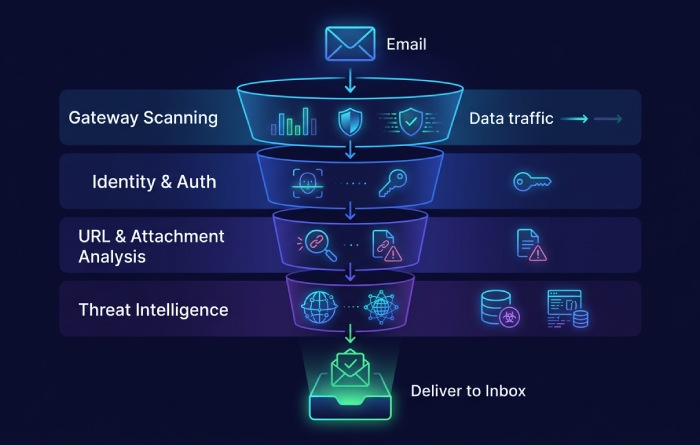
Cloud anti-phishing systems process emails in real time by analyzing sender identity, domain reputation, URLs, attachments, and behavior signals. ML models and threat intel block phishing before delivery or quarantine suspicious messages instantly.
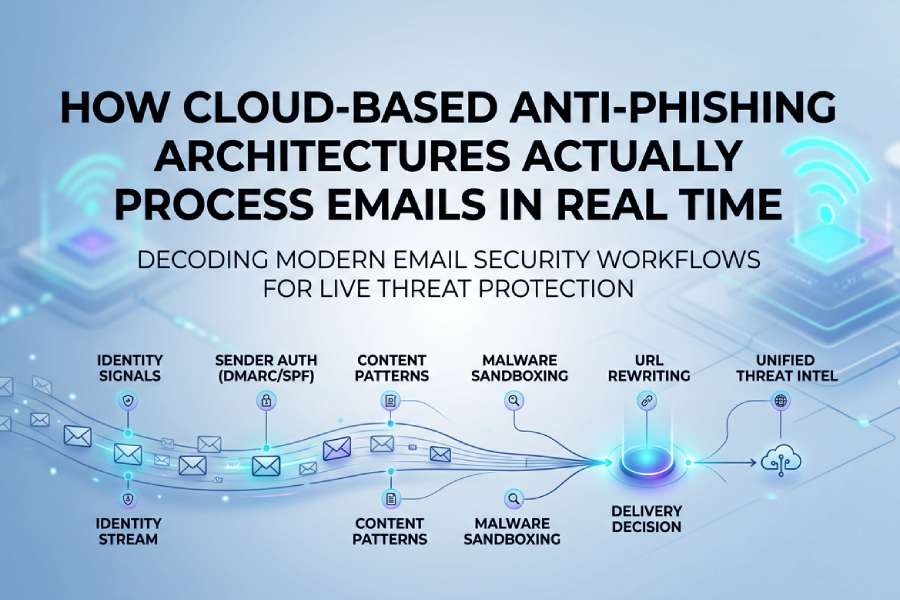
Modern cloud-based anti-phishing solutions process email as part of a live phishing-protection workflow, not as a simple filter. Every message is evaluated across identity signals, sender infrastructure, content patterns, attachments, URLs, user context, and global threat intelligence before a delivery decision is made. This is why cloud email security platforms such as Mimecast, SpamTitan, Proofpoint, Barracuda Essentials, Microsoft M365 security tools, and TitanHQ services are central to enterprise email protection against phishing attacks, malware, and broader cyber attacks.
Ingestion and Routing: How Cloud Email Gateways Receive, Mirror, or API-Scan Messages
Gateway-Based Mail Flow
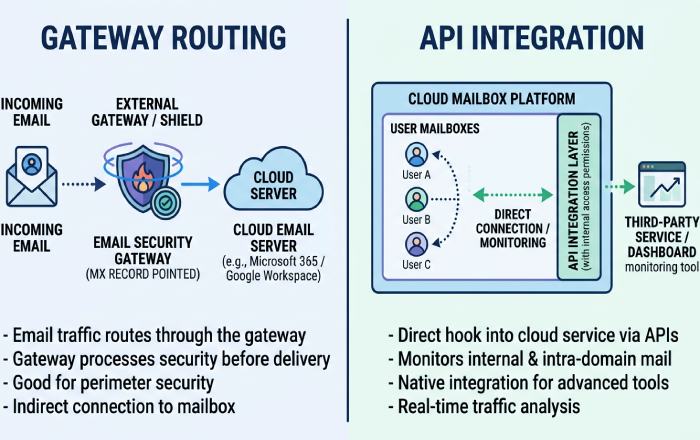
In a traditional cloud email security deployment, mail is routed through an email gateway before reaching Microsoft M365, Google Workspace, or another mailbox platform. MX records point inbound mail to the provider’s cloud platform, where inbound email scanning begins. Products such as Mimecast Secure Email Gateway, SpamTitan Plus, and Barracuda Essentials inspect messages before forwarding safe mail to the destination tenant.
This gateway model gives anti-phishing software a strong enforcement point. It can reject malicious connections, apply spam detection, block malware, quarantine suspicious messages, and enforce threat protection policies before a user ever sees the email.
API-Based and Journal-Based Scanning
Many cloud-based anti-phishing solutions now supplement gateway filtering with API-based scanning inside M365. Instead of relying only on MX routing, the cloud email security service connects to mailboxes through Microsoft Graph APIs or journaling integrations. This allows real-time scanning and post-delivery remediation when phishing attacks are detected after delivery.
API scanning is particularly valuable for internal threats, compromised accounts, and business email compromise. A message may pass initial email security checks, but later become dangerous when a link is weaponized. API-based email protection can identify that shift and remove the message from mailboxes.
Mirroring and Hybrid Architectures
Some organizations use mirrored traffic or hybrid routing, especially when they need compliance, email archiving, backup and recovery, or data loss prevention alongside anti-phishing software. In these deployments, messages may be copied to a cloud platform for analysis while primary delivery continues through M365 or another collaboration suite.
Vendors such as Proofpoint, Mimecast, SpamTitan, and TitanHQ often support layered deployment models. This reflects the broader move toward multi-layered security, where cloud email security, DNS protection, web filtering, endpoint controls, and user training work together against cyber attacks.
Real-Time Signal Analysis: Sender Reputation, Authentication Checks, Headers, URLs, Attachments, and Content
Sender and Infrastructure Reputation
Once a message enters the pipeline, cloud-based anti-phishing solutions evaluate sender reputation. They inspect IP history, domain age, sending volume, geolocation, autonomous system reputation, and known abuse patterns. Techniques such as blacklisting, whitelisting, greylisting, and geoblocking help reduce exposure to phishing attacks, spam, and malware.
Spam detection still matters, but modern email security goes beyond classic Spam Filters. Reputation scoring is combined with behavioral analysis, Bayesian Analysis, and live telemetry from millions of messages across the provider’s customer base.
Authentication and Header Analysis
The system then validates DNS authentication using protocols (DMARC, DKIM, SPF). These checks confirm whether the sender is authorized to send on behalf of the domain and whether the message has been altered in transit.
Header analysis is equally important. Cloud email security engines inspect reply-to mismatches, display-name spoofing, route anomalies, forged domains, and lookalike sender patterns. This helps identify spear phishing, CEO fraud phishing, and business email compromise attempts that may not contain obvious malware.
Impersonation protection is where products such as Targeted Threat Protection – Impersonation Protect from Mimecast become relevant. These controls compare sender identity against executives, suppliers, and trusted partners to detect social engineering before it results in a security breach.
URL, Attachment, and Content Inspection
URL protection is another core layer. Solutions such as Targeted Threat Protection – URL Protect rewrite links at the time of delivery and re-check them when clicked. This matters because many phishing attacks use clean URLs initially, then redirect to credential theft pages later.
Attachment scanning inspects file types, macros, embedded scripts, archives, and payload behavior. Targeted Threat Protection – Attachment Protect and similar Sandboxing Technology detonate suspicious files in isolated environments to detect malware that static scanning might miss.
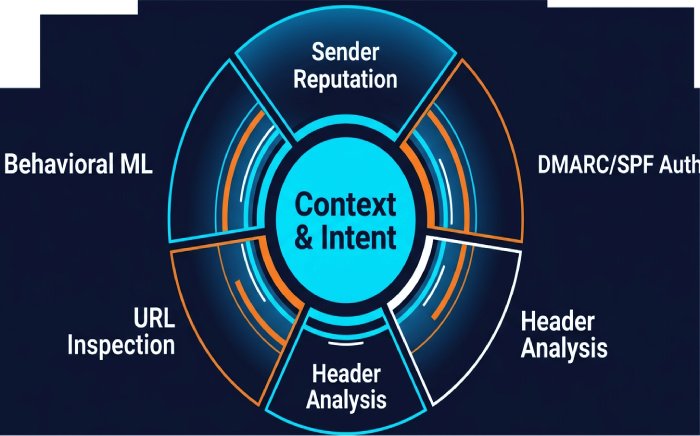
Content analysis evaluates tone, urgency, invoice language, credential prompts, payment instructions, and brand impersonation. Anti-phishing software correlates these signals with user behavior, organizational context, and risk assessment models to improve email protection while managing the false positive rate.
Machine Learning and Threat Intelligence: How Cloud Systems Detect Known and Emerging Phishing Campaigns
Global Threat Intelligence at Cloud Scale
The advantage of cloud-based anti-phishing solutions is scale. A cloud email security provider can observe campaign patterns across thousands of tenants and millions of messages. Threat intelligence from a Security Operations Center, domain feeds, malware analysis, DNS telemetry, and web reputation systems allows the platform to identify active phishing attacks quickly.
For example, TitanHQ combines email security with broader services such as WebTitan and DNSFilter-style web protection approaches, while Cisco Umbrella contributes DNS-layer defense concepts that complement email protection. Proofpoint, Mimecast, SpamTitan, and Microsoft also rely heavily on threat intelligence to strengthen threat protection against cyber attacks.
Machine Learning and Behavioral Models
Machine learning models classify messages based on features such as sender history, lexical patterns, link structure, attachment behavior, header anomalies, and historical user interactions. Behavioral analysis helps identify unusual communication patterns, such as a supplier suddenly requesting payment redirection or an executive asking for gift cards.
This is important for detecting spear phishing and business email compromise, where messages often contain no malware and may bypass basic spam detection. Advanced security tools apply targeted threat protection to subtle identity and intent signals rather than relying only on signatures.
Detecting Emerging Campaigns
Emerging phishing attacks often begin with low-volume testing. Cloud-based anti-phishing solutions detect these early signals by correlating weak indicators: newly registered domains, unusual redirect chains, suspicious attachment entropy, abnormal sending velocity, and compromised legitimate accounts.
CyberSentriq, Pax8 Beyond, M365 Threat Scan services, and Email & Collaboration Threat Protection assessments are examples of ecosystem offerings that help organizations understand where their cloud email security posture is weak. Some case-led materials, such as Case Study: Senata and Case Study: BLG, show how organizations evaluate anti-phishing software in practical environments rather than only in lab tests.
Decisioning and Enforcement: Quarantine, Warning Banners, Link Rewriting, Sandboxing, and User Delivery
Scoring and Policy Decisions
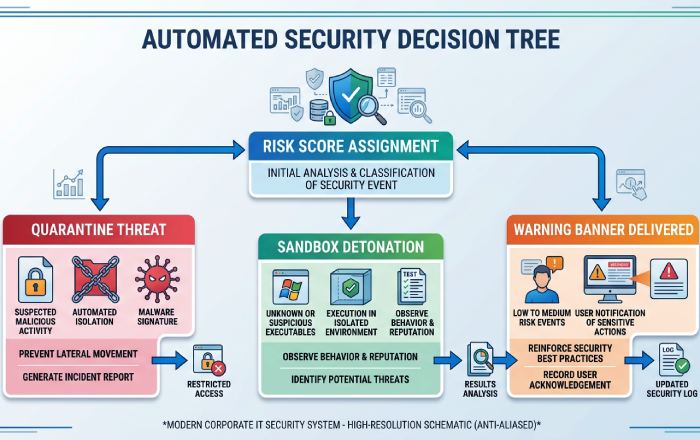
After signal analysis, the platform assigns a risk score. Low-risk messages are delivered, obvious spam or malware is rejected, and suspicious content is quarantined. The decision engine balances security with productivity, because aggressive email security policies can increase the false positive rate and disrupt business workflows.
Policies may vary by department, geography, executive status, or risk level. Finance teams may receive stricter email protection because they are frequent targets for CEO fraud, phishing, and invoice fraud. Legal, HR, and healthcare teams may require stronger compliance controls, email encryption, and data loss prevention.
User-Facing Warnings and Controls
When a message is suspicious but not definitively malicious, cloud email security systems may add warning banners. These banners alert users to external senders, failed authentication, unusual reply-to addresses, or possible impersonation protection triggers.
Link rewriting supports ongoing URL protection, while attachment scanning and sandboxing stop dangerous files before execution. In some cases, outbound email filtering is also applied to detect compromised accounts sending spam, phishing attacks, or sensitive data outside the organization.
Vendor Examples in Enforcement
Mimecast Secure Email Gateway commonly integrates capabilities such as Targeted Threat Protection – URL Protect, Targeted Threat Protection – Attachment Protect, and Targeted Threat Protection – Impersonation Protect. SpamTitan, often discussed in comparisons such as SpamTitan as a Mimecast Alternative, emphasizes layered spam detection, malware defense, phishing controls, and cloud-based anti-phishing solutions delivered as a subscription service.
Barracuda Essentials, Proofpoint, Microsoft Defender for M365, and TitanHQ’s SpamTitan Plus also provide cloud email security and threat protection features. Susan Morrow and other cybersecurity educators frequently emphasize that no single anti-phishing software control is sufficient; technical defenses must be paired with security awareness training and user behavior reinforcement.
Continuous Feedback Loops: User Reports, Post-Delivery Remediation, and Model Updates
User Reporting and Security Awareness
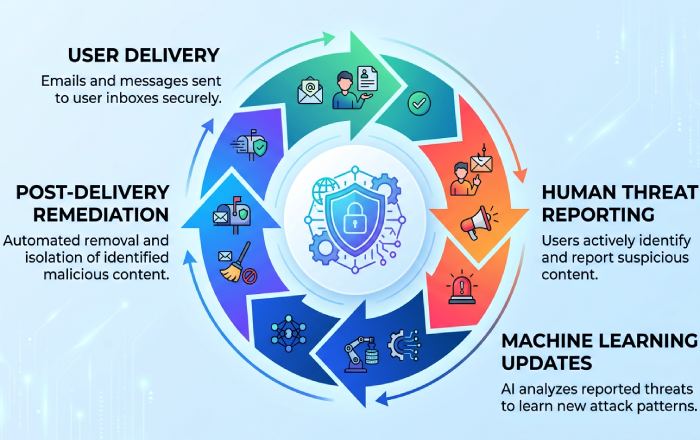
Even strong cloud-based anti-phishing solutions benefit from human feedback. A well-trained employee can report a suspicious message that automated controls classified as borderline. Report buttons feed messages back to the security team or managed service provider for analysis.
Security awareness training, phishing simulation, and ongoing user training help employees recognize social engineering, identity theft prevention risks, credential harvesting, and malicious attachments. This human layer improves email protection and strengthens the organization’s resistance to cyber attacks.
Post-Delivery Remediation
Cloud email security is not finished when a message is delivered. If threat intelligence later determines that a URL is malicious or an attachment contains malware, API-based tools can search across mailboxes and remove the message. This incident remediation process reduces dwell time and limits the chance of a security breach.
Post-delivery controls are especially important for M365 environments, where attackers may use compromised accounts, internal forwarding rules, or OAuth abuse. M365 Threat Scan workflows can identify risky messages already inside mailboxes and support faster cleanup.
Model Updates and Continuous Improvement
Every user report, sandboxing result, URL click, authentication failure, and malware verdict can feed back into the detection model. Machine learning systems update classifiers, threat intelligence teams add new indicators, and policy engines refine enforcement decisions.
This continuous loop is what separates modern cloud-based anti-phishing solutions from legacy Spam Filters. Cloud email security platforms operate as living systems: they learn from phishing attacks, adapt to cyber attacks, improve spam detection, reduce malware exposure, and deliver more precise threat protection over time.
General Manager
General Manager of DuoCircle. Product strategy and commercial lead across DuoCircle's 2,000+ customer base.
LinkedIn Profile →Protect your inbox from phishing attacks
Real-time email security with 60-day free trial. No credit card required.